Edmonton is on track for its wettest summer on record, and homeowners across the region are still bailing out flooded basements. For the contractors and restoration crews trying to keep up, the pressure is not just the volume of work—it is proving what they did, fast enough and clearly enough that restoration companies can bill it and insurers will pay.
The stakes are visible in the stories coming out of the city this summer. As CityNews Edmonton reported, first-time homeowner Sarah has cleaned up her flooded basement four times this season while juggling a one-year-old. Her insurer denied the claim—her policy does not cover this type of water seepage. "It's frustrating. It takes a lot of time and a lot of effort. It's exhausting," she told CityNews, adding that repairs could run into "tens of thousands of dollars" the family does not have.
Even homeowners who are covered are stuck waiting. Property owner Mr Huberdeau, dealing with backed-up sewage, called his insurer as soon as he found the flood. "There's nobody available. All the major companies are all flat out," he told CityNews. He found help through a friend who could come the next day—most people are not that lucky.
Why 2026 is different for Alberta restoration crews
The demand is unlike a normal season. A Typical company which usually fields around five calls a month, is now getting 25 to 45. EPCOR says the rainfall itself is testing the system.
For a contractor, a season like this changes the math. When every crew is booked out and homeowners are anxious, there is time on site to do the work once—and there is not time to come back because a claim got kicked over missing documentation. The backlog makes thorough field records more important, not less. A denied or delayed claim in this environment does not just cost the homeowner; it ties up the contractor in disputes instead of the next job.
Denied claims start with weak proof of cause
Home owners denial points at the issue every Alberta contractor is running into this summer: coverage turns on how the water got in. Overland flooding, sewer backup, and gradual seepage are treated differently by different policies, and "seepage" is a common exclusion. When a claim is contested, the question is whether the damage was a sudden covered event or a pre-existing condition—and that is answered by what the crew documented on arrival.
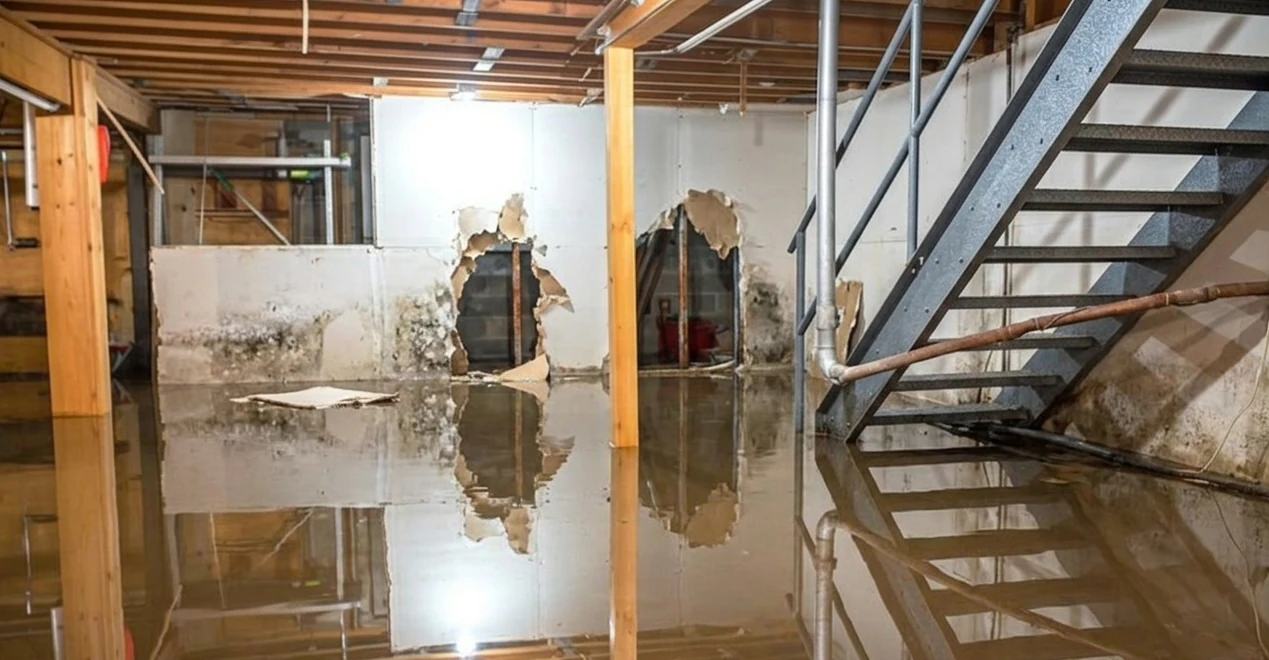
That means the record has to show the point of entry, the water line, the category of water, and the affected areas before extraction begins. A file that shows only a dry, torn-out basement invites the adjuster to ask what was actually flood-related. A file that shows the sewage backing up through the floor drain, the water line on the wall, and the soaked materials—dated and tied to the address—answers the question before it is asked.
Document the loss before the evidence dries
Water damage is invisible once the basement dries and the drywall is cut. The only proof of day one is what the crew captured. A repeatable sequence keeps it defensible under a heavy caseload:
- Exterior, point of entry, and address confirmation—window wells, downspouts, a backed-up floor drain
- Standing water and the water line before extraction
- Category indicators: clean supply water, gray water, or sewer backup
- Room-by-room affected areas with labels
- Moisture and humidity readings, photographed at the surface so the number ties to a location and time
- Materials removed and hidden damage exposed during demo
- Drying equipment placement and daily progress photos
- Pre-existing conditions and prior repairs, reported in the same tone as the damage
Keep each visit organized under the correct project so the restoration company sees the timeline at a glance instead of scrolling an unsorted camera roll—critical when a crew is running several losses in a week.
Mark what matters, then prove the timeline
"Water in basement" is not a usable note. "Northeast bedroom, 18-inch water line, sewer category, drywall cut to 24 inches, carpet and pad removed" gives the restoration company and the adjuster something they can locate, price, and defend. Use photo annotations to point at the water line, a mold spot, or the edge of a flood cut—an arrow and a short label, not heavy markup.
Because flood work runs over days, the file has to show the basement trending dry, not jumping from wet to finished. Records captured with GPS and time stamps add location and sequence, which matters when a claim is reviewed weeks later by an adjuster who never saw the water.
Basements have no signal—capture offline
Edmonton basements are exactly where cell service drops out, and first-visit crews are moving fast. Offline capability lets the crew capture proof underground immediately, then sync it into the project record once they are back to signal. Delayed documentation is where details get forgotten and photos get mixed between jobs—the last thing a crew needs when it is running 25 to 45 losses a month instead of five.
Because multiple techs hand off across a multi-day drying job, assign follow-ups on site so the next person knows which rooms still need readings and which areas are cleared for reconstruction.
Turn the field record into a report they can bill
The restoration company does not want 200 loose images, and the adjuster does not want a sales pitch. Both need a clear, labeled PDF report that follows the loss from arrival through drying: property details, cause if stated, room-by-room findings, water-line documentation, moisture readings, materials removed, and daily progress. Keep observations separate from the estimate—the report says what was found, the estimate says what the work will cost.
In a season where insurers are denying seepage claims and every restoration company is flat out, that report is what gets a covered claim approved and paid without a second trip.
Why Alberta crews use CrewBox
CrewBox Pro keeps the whole chain intact from the wet basement to the office: capture photos with GPS and time stamps underground, mark water lines and damage with annotations, tag areas by room and phase, assign follow-ups across a multi-day drying job, and sync everything into the right project once the crew is back to signal. When the work is done, the same organized field record becomes a clean PDF report the restoration company can hand straight to the insurer—no reconstructing the story after the water is gone.
See CrewBox pricing and sign up free to build defensible flood documentation through the rest of Alberta's record-wet summer.
---
Reporting on Edmonton homeowners and flooding sourced from CityNews Edmonton, July 16, 2026.